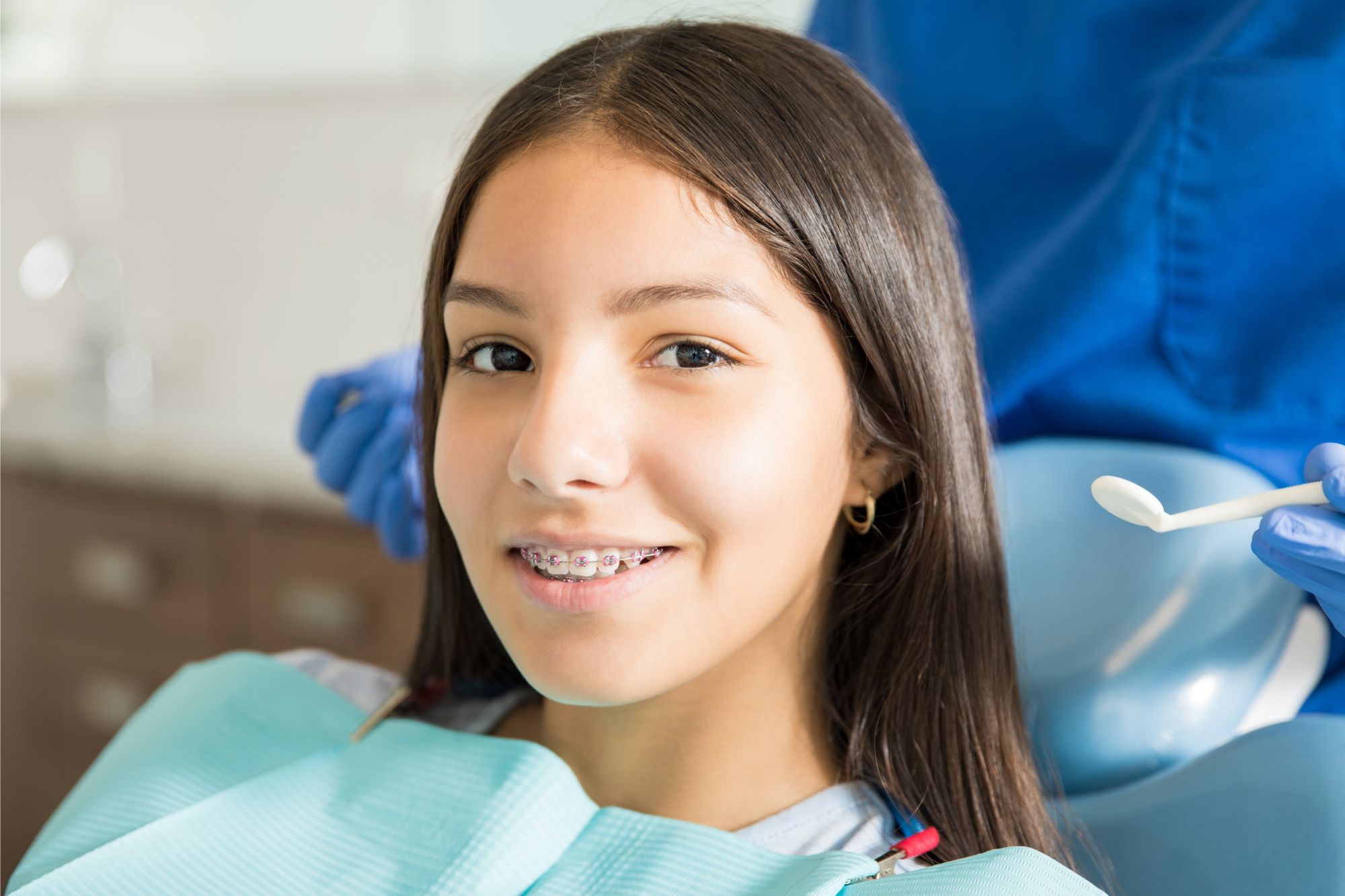

Retainers after braces matter more than most people expect. Your braces come off, you see your new smile in the mirror, and the hard part feels finished. In reality, one small appliance decides whether that result holds for decades or slowly slips away.

What Is a Retainer and Why Do You Need One After Braces?
A retainer is a custom appliance that holds your teeth in their new positions after braces or Invisalign come off. It keeps corrected teeth from drifting back toward where they started, a shift orthodontists call relapse. Retainers are worn full-time at first, then at night for the long term.
Once brackets or trays are removed, the bone and ligament around each tooth need months to firm up. None of that settling happens overnight, which is exactly why retention begins the same day active treatment ends rather than weeks later.
Here is what goes on under the surface. During treatment, the periodontal ligament that anchors each tooth to bone stretches and reshapes as teeth move. That tissue stays soft and responsive for a while after treatment ends, and the surrounding bone needs months to remodel around the new positions.
Retention is not an optional add-on. Orthodontists treat it as the final phase of care, just as real as the months you spent in brackets or trays.
The same rule applies no matter how you got there. Modern metal braces, LightForce clear braces, and Invisalign all move teeth through bone, and all three finish with retention. Dr. Patel at Bucks Mont Orthodontics walks you and your family through the retention plan before your braces ever come off, so nothing feels like a surprise on the big day.
Skipping retention is the single most common reason adults come back years later asking about a second round of treatment.
How Long Do You Wear Retainers After Braces?
Most people wear a retainer full-time at first, often around 20 to 22 hours a day for the first several months, then move to nights only. Dr. Patel sets your specific schedule, since it depends on what was corrected and how your bite settles afterward. That nighttime habit generally continues indefinitely, because teeth keep shifting subtly throughout life and retention has no true finish line.
Retention usually moves through three phases:
- Full-time wear. You wear your retainer all day and all night for the first stretch, removing it only to eat, brush, and floss. This is the highest-risk window, because the bone has not finished settling.
- Nighttime-only wear. Once Dr. Patel checks your bite and confirms things are stable, you drop to sleeping in your retainer. Most people find this stage easy to live with.
- Long-term nighttime or several nights per week. Many adults settle into wearing their retainer every night or a few nights weekly for life. The American Association of Orthodontists notes that teeth naturally shift with age, which is exactly why retention continues.
Timelines shift from person to person. A case that started with severe crowding, a rotated tooth, or wide spacing often needs a longer full-time stretch than a mild correction. Age plays a role too, since younger patients are still growing and adult bone remodels more slowly.
Your teeth do not stay frozen at 18 or 30. Lower front teeth in particular tend to crowd gradually over the years, even in people who never had braces at all. A retainer worn a few nights a week is the simplest protection against that late drift.
If you ever notice your retainer feels tight, snug, or hard to seat, that is useful information. Let the team know rather than forcing it or setting it aside.
Benefits of Wearing Your Retainer Consistently
Consistent retainer wear protects everything you put into your smile. The payoff goes well beyond appearance, and it shows up in both how your teeth look and how they function day to day.
What Does Consistent Retainer Wear Protect?
- Protects the result. You spent months or years in treatment. A retainer keeps that result intact.
- Prevents crowding relapse. Lower front teeth are the first to shift and the most noticeable when they do.
- Maintains a stable bite. Even chewing forces protect your teeth and jaw joints from uneven wear.
- Keeps cleaning simple. Straight, well-spaced teeth are easier to brush and floss, which supports healthier gums and fewer cavities. The same habits that kept your braces clean carry straight over to retention.
- Avoids retreatment later. Redoing treatment years down the road means going through the whole process a second time.
There is a confidence piece too. When you know your smile is holding steady, you stop second-guessing photos and start forgetting about your teeth entirely. That is the goal.
How Hard Is It to Keep Up With Retainers After Braces?
Retention is genuinely the easiest phase of care. Slip it in, go to sleep, take it out in the morning. Compared to everything that came before, it asks very little of you.
Building the habit takes a few weeks at most. Keeping your case on the nightstand, packing it first when you travel, and rinsing the retainer while you brush turn retention into something automatic rather than something you have to remember.
Types of Retainers Compared
Three retainer styles cover nearly every case, and each one has real strengths. Dr. Patel picks based on your original bite, your habits, and what you will realistically wear.
What Are Clear Retainers?
Also called Essix or vacuum-formed retainers, these are thin transparent trays that hug your teeth. They are nearly invisible, comfortable, easy to travel with, and almost nobody notices them. Care is simple, a daily rinse and a gentle brush in cool water, then straight into the case. The tradeoff is lifespan, since the plastic thins and can crack, so plan on replacing them every one to three years. They suit adults and teens who want discretion.
What Is a Hawley Retainer?
The classic design pairs a metal wire across the front teeth with an acrylic body that sits against the palate or behind the lower teeth. Hawleys are tough and often last many years, and Dr. Patel can make small refinements to the wire if a tooth needs slight tweaking. Brush the acrylic, keep it cased when it is out of your mouth, and it will hold up. They are more visible, which matters less than you would think at night.
What Is a Fixed (Permanent) Retainer?
A thin wire bonded behind your lower or upper front teeth does the work for you. Nothing to remember, nothing to lose, nothing to forget in a napkin at a restaurant. You will need to floss carefully around it with a threader and let the team check the bond at your regular visits, since the bonding can loosen over time. It is the usual recommendation for high relapse risk and for anyone likely to forget removable wear.
Combinations are common and often the smartest choice. A bonded lower wire paired with a clear upper retainer gives you compliance-free protection where relapse risk is highest, plus a discreet option up top.
What To Do If Your Retainer Breaks or Goes Missing
It happens to almost everyone eventually. Retainers get left in hotel rooms, wrapped in a napkin at lunch, and occasionally chewed by the family dog. What matters is how fast you deal with it.
Call the office as soon as you notice. A few days without retention usually causes no harm, but a few weeks can be long enough for teeth to start drifting, and the longer you wait the more likely it is that a replacement will not seat properly.
If your retainer is cracked or a wire has come loose, stop wearing it and bring it in. A damaged retainer can put pressure in the wrong place, and a bonded wire that has partly detached can leave one tooth free to move while the others stay put.
Ask about a backup set while you are still in treatment. Having a spare means a lost retainer never turns into weeks without retention, and it is the easiest way to protect the result long term.
Who Needs Which Retainer?
Your original bite tells Dr. Patel a lot about which retainer will hold best. A few patterns come up again and again:
- Severe original crowding or rotated teeth. These cases carry the highest relapse risk, so a bonded wire behind the lower front teeth is often the recommendation.
- Busy teens and adults. If mornings are chaotic and travel is frequent, a fixed retainer removes the memory requirement entirely.
- High esthetic concerns or metal sensitivities. Clear retainers keep everything discreet and use no metal components.
- Grinders and clenchers. Nighttime grinding wears through thin plastic quickly, so thicker or more durable materials make sense.
- Growing patients. Younger teens sometimes need adjustable designs while final growth finishes.
This is where experience matters more than a catalog. Dr. Chirag Patel looks at how your teeth started, what moved the most during treatment, and what you will realistically keep up with, then builds retention around all three.
At our relationship-based practice, retention conversations happen face to face rather than in a rushed handoff at the end of your last appointment. Patients come to our Warrington office from Doylestown, Warminster, and across Bucks County, and everyone leaves with written wear instructions, a case, a replacement plan, and scheduled retainer checks.
Retainer FAQs After Braces
What happens if I stop wearing my retainer?
Teeth begin shifting within weeks to months, and the movement often starts with the lower front teeth crowding together. Early on, going back to consistent wear may be enough to reseat things, though a retainer that no longer fits should not be forced. Call the Bucks Mont Orthodontics team instead so we can check what has changed.
Can I get my braces results back if my teeth already shifted?
Often, yes. Minor shifting can sometimes be addressed with a new retainer or a short round of Invisalign. Bigger changes may call for a full second round of treatment, which is exactly the outcome consistent retention is designed to prevent. A free consultation will tell you where you stand.
How do I clean my retainer?
Rinse it in cool water every time you take it out, then brush it gently with a soft toothbrush and a small amount of mild soap. Never use hot water, boiling water, or the dishwasher, because heat warps the plastic and ruins the fit. Keep it in its case when it is not in your mouth.
How often do retainers need to be replaced?
Clear retainers typically need replacing every one to three years, depending on how much you grind and how carefully you handle them. Hawley retainers usually last considerably longer. Bonded wires can stay put for many years, though the bonding can loosen and should be checked at your regular visits.
Do retainers hurt?
Mild tightness or tenderness for a day or two is normal, especially after a night or two away from your retainer. That sensation means the appliance is doing its job. Sharp pressure on one tooth, a rough edge, or a retainer that will not seat all the way is worth a quick call to us.
Can I wear a retainer if I had Invisalign instead of braces?
Absolutely. Retention follows every type of treatment, because teeth move through bone the same way whether they were guided by Invisalign, LightForce clear braces, or modern metal braces. Many Invisalign patients find the transition easy, since a clear retainer feels much like the trays they already know.
Should I wear my retainer if I have a bonded wire?
Sometimes both are recommended. A bonded wire holds the front teeth while a removable retainer covers the rest of the arch and keeps your bite settled. Dr. Patel will tell you exactly what your case needs.
Keep the Smile You Worked For
Retention is the quiet part of orthodontics that decides how long your results last. Wear your retainer, bring it to your checkups, and replace it when it wears out. That is the whole strategy.
If you have questions about retainers after braces, or your teeth have started shifting and you would like a professional opinion, the team at Bucks Mont Orthodontics is happy to take a look. Contact us to ask about a free consultation and we will review how your teeth are sitting today, what your retainer is doing, and what wear schedule makes the most sense going forward.